
From Demand Review to Production Sequence
Power BI can show you the error, but Claude can help turn it into the questions the planner needs on the table.
For demand planners, master planners, production planners, and AI transformation teams
The published artifact
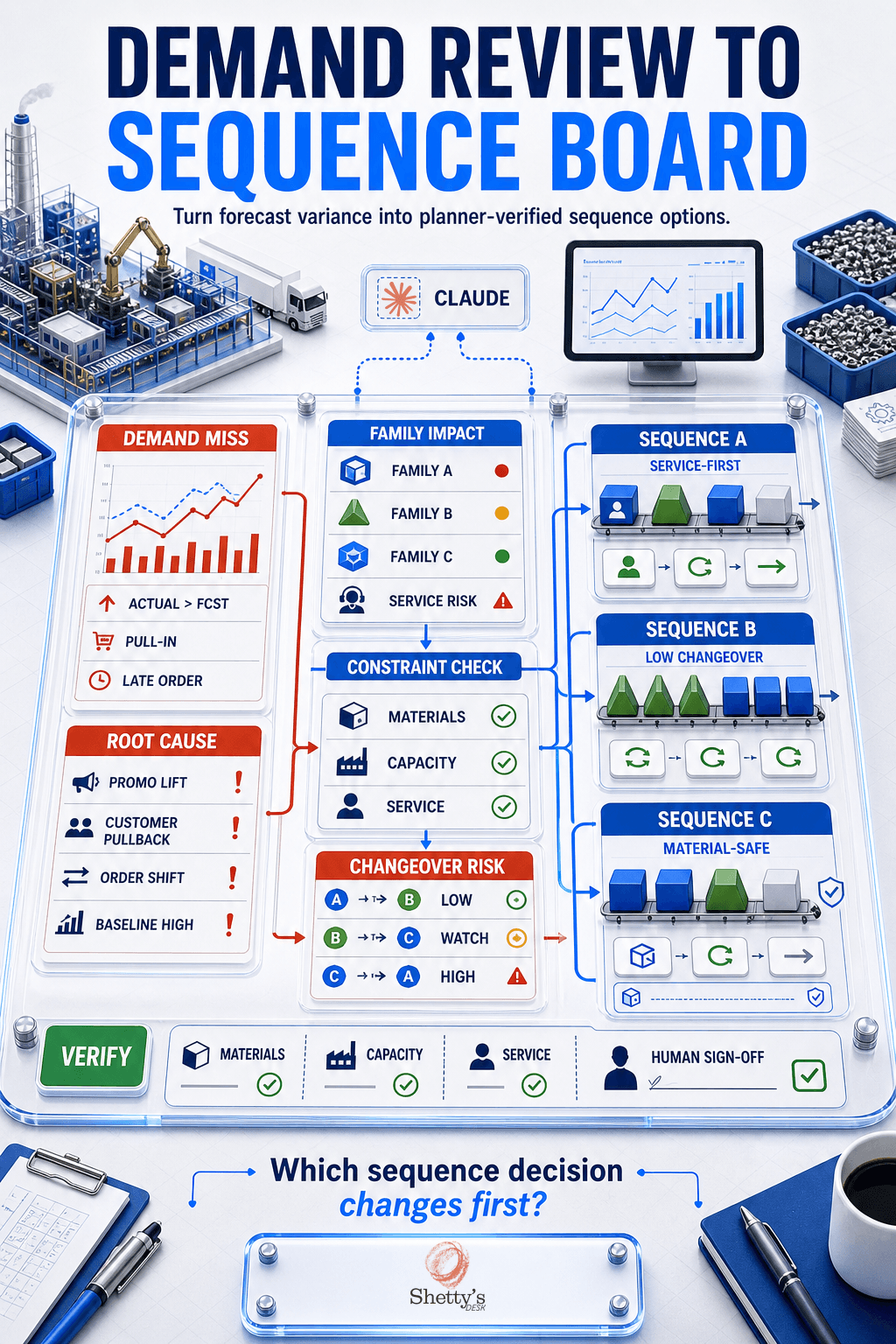
Decision architecture
How to read the artifact
Follow the operating logic in order. Each step should leave a clearer piece of evidence, question, or decision for the review.
- 01
Demand miss
Identify the family, customer, period, and magnitude that can still affect the factory plan.
- 02
Root-cause hypothesis
Draft the most likely explanation and show which evidence would confirm or reject it.
- 03
Family and promise impact
Connect the miss to the line, material, product family, and customer commitment.
- 04
Constraint checks
Recheck material, capacity, service priority, frozen window, and changeover consequences.
- 05
Sequence options
Prepare two or three different sequences with trade-offs and questions for planner review.
The minimum input pack
- Forecast versus actual by product family
- Open orders and customer promise dates
- Current production plan and frozen window
- Line constraints and changeover rules
- Material status, service priority, and planner comments
Questions for the next review
- 01Which miss still changes a production decision?
- 02Which family, line, or customer promise is exposed?
- 03What constraint moved?
- 04Which sequence option creates the clearest trade-off?
Decision boundary
What the artifact prepares, and what the team still owns
Claude prepares the first operating artifact and the questions behind it. The planner validates the cause, chooses the sequence, and owns every production-system change.
Published caption